
THE MILLION-DOLLAR QUESTION
At what temperature should the Corian® sheets be heated?Solid Surface)?
First, we need to ensure that our material is made of pure acrylic (also known as polymethyl methacrylate) and contains no polyester. To guarantee this, I recommend working with reputable brands such as Corian, Krion, HI-MACS, Hanex o BetacrylThis way we ensure that the sheets will have the maximum possible flexibility.
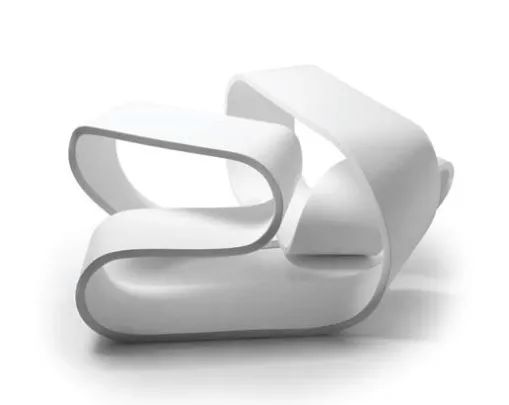 I want to remind you that Solid Surface is composed of 1/3 acrylic and 2/3 natural minerals.
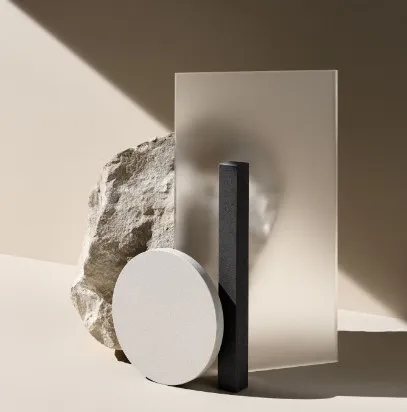 These minerals come from aluminum trihydrate (ATH). It is a derivative of bauxite, a mineral from which aluminum is extracted.
The difference between major brands produced in the USA, South Korea, or Slovenia and panels manufactured in China lies in the quality of the acrylic. Acrylic is indeed the second most expensive component in solid surface panels. The most expensive is still the pigments that give the panel its final color. This is why white panels are the most economical.
One day a workshop manager told me: "I can recognize the brand of solid surface sheets I use by the smell it gives off when I cut it."
"I can recognize the brand of solid surface boards he uses by the smell it gives off when I cut it."
And he was right. What we smell when we cut a solid surface board is the smell of the acrylic, which, due to the abrasion of the saw, heats up and emits that odor. This serves as proof that the quality of acrylic varies depending on the brand. That said, the major brands are aware of this and use high-quality acrylic. This quality is what allows us to achieve up to 26% elasticity in a hot solid surface sheet without that it breaks
 Now, in order to manufacture a sink with a depth of 140 mm without the material cracking, we must follow a few tips that I will detail below:
Must use a reliable aluminum plate or hot air oven (we'll see in another post what the differences are between each one) but our oven must be reliable.
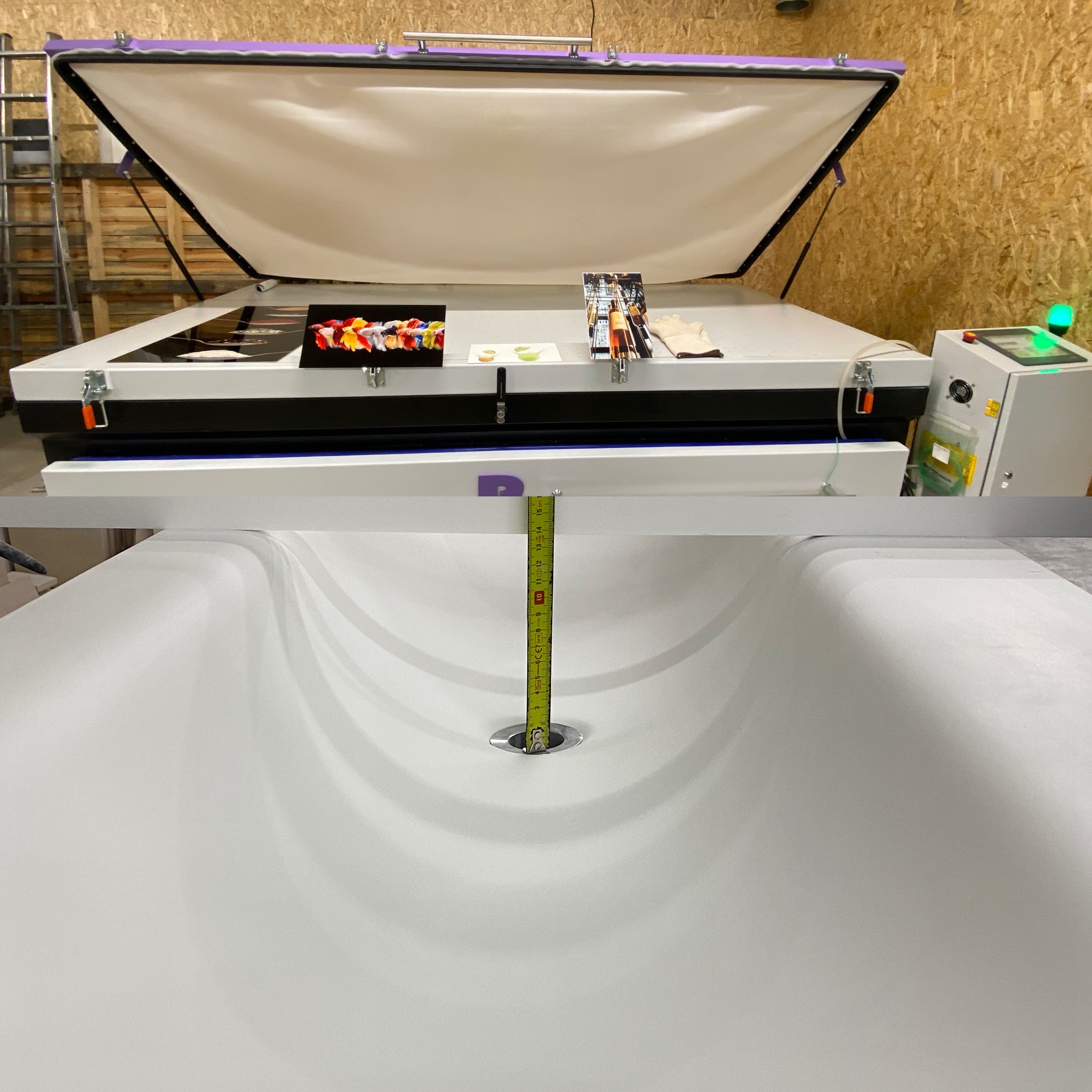
What characteristics does a reliable oven for thermoforming solid surfaces have?
For an oven to be reliable, it must have a constant temperature across its entire surface without variations exceeding 5 degrees between the lowest and highest temperatures in the oven. Unfortunately, most ovens manufactured in Europe do not meet this essential requirement. Many have temperature variations of 15 to 25 °C across the hot aluminum plate or within the hot air oven. This is the biggest criticism that can be leveled at brands like Global or Columbus.
- The ideal thermoforming window for solid surface
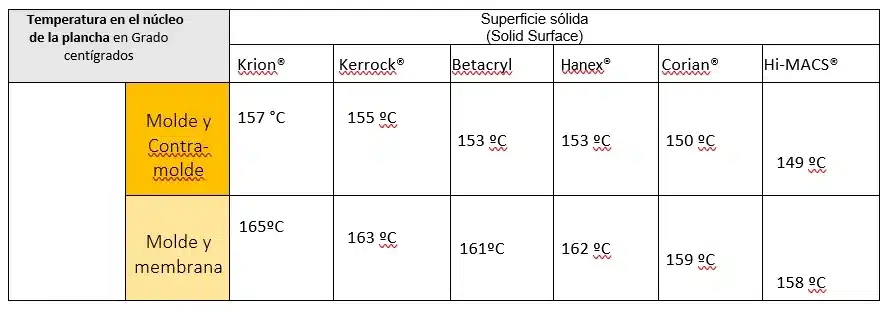
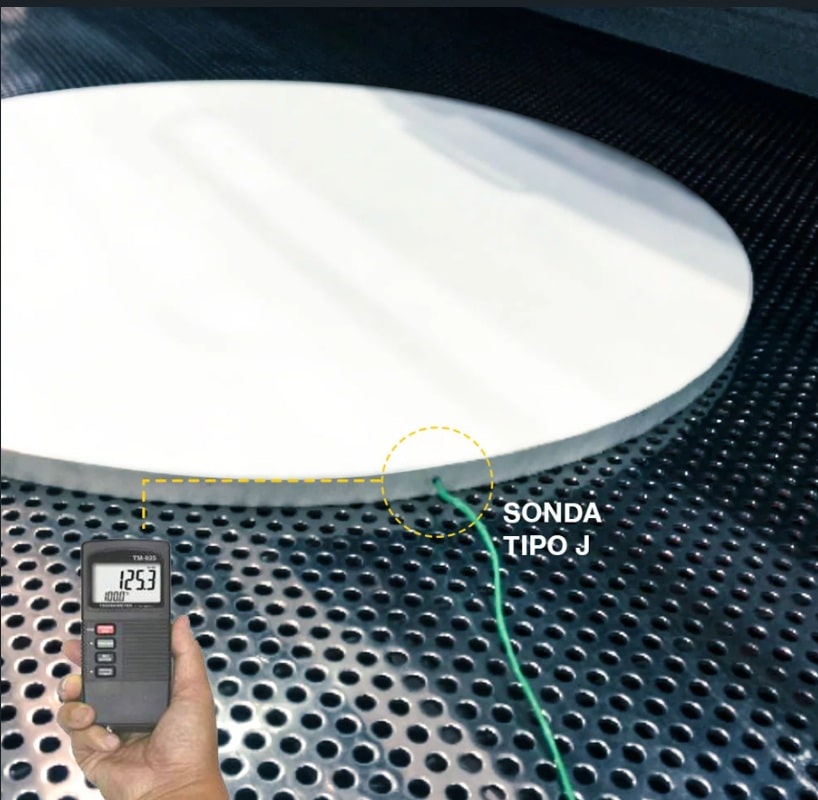 It is from 149 to 168 °C. At lower temperatures the material does not have all its flexibility, and at higher temperatures the iron cracks and yellows.
- The warm-up time depends on 3 factors:
- The thickness of the sheet
- The size of the iron
- The initial temperature of the iron in our workshop
Unfortunately, there is no table of values that can take into account those three parameters to give us the exact warm-up time. For that reason It's helpful to know the temperature at the core of the iron while we heat it up.That device exists in some machines equipped with PLC and a J-type probe which alerts the operator when the solid surface plate has reached its optimum temperature.

What happens if we leave a griddle in our oven with a maximum temperature set at 165 °C for longer than expected?
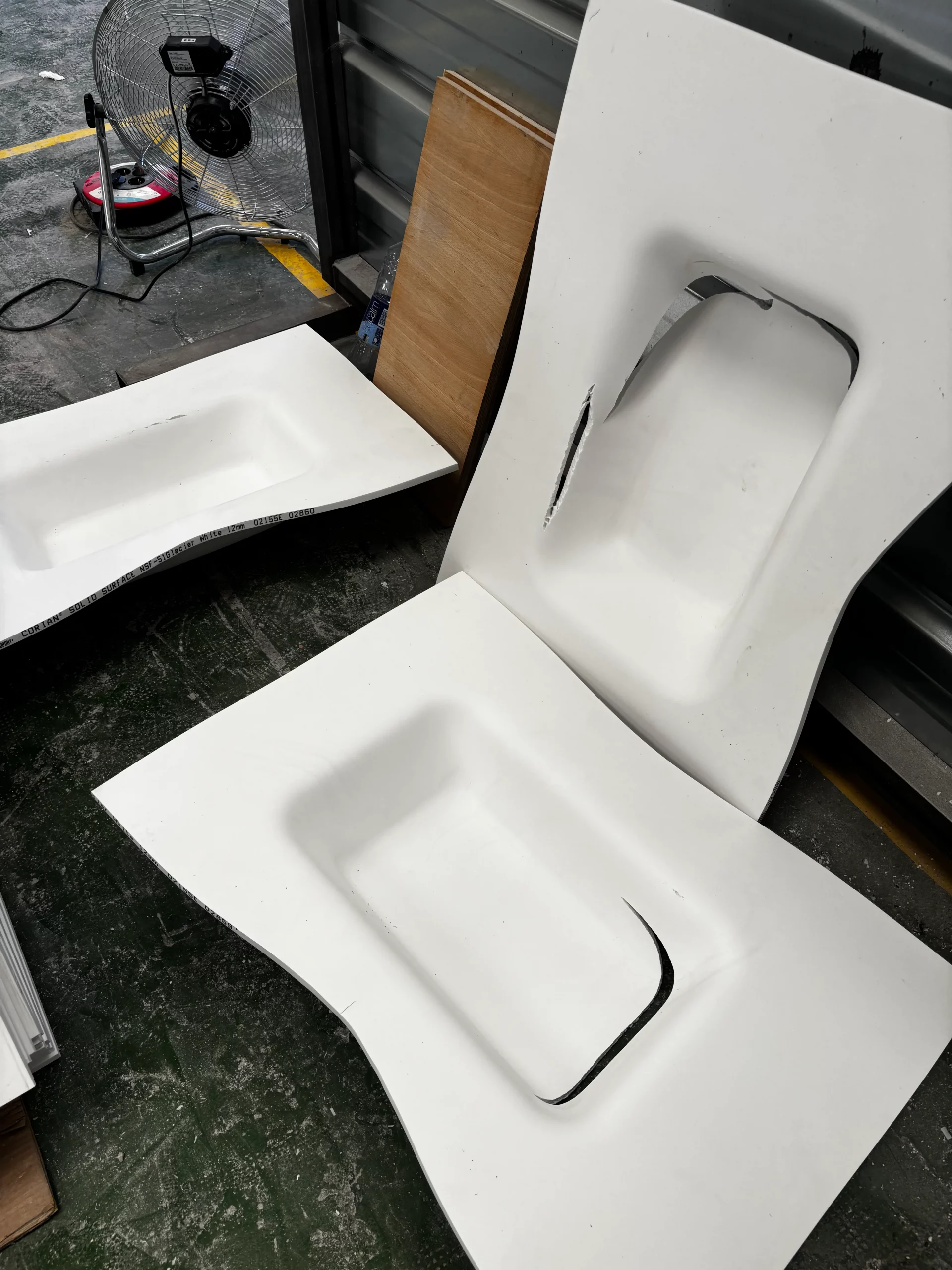 We have observed that after reaching its optimal temperature, the solid surface sheet is capable of reaching temperatures far exceeding the maximum we have set in the oven. This phenomenon is due to the mineral component of the Corian® sheet. This component acts as a heat reservoir, and it is possible that in an oven at 165°C, the solid surface sheet may reach 185°C, with drastic consequences such as color change and the appearance of bubbles on the surface.
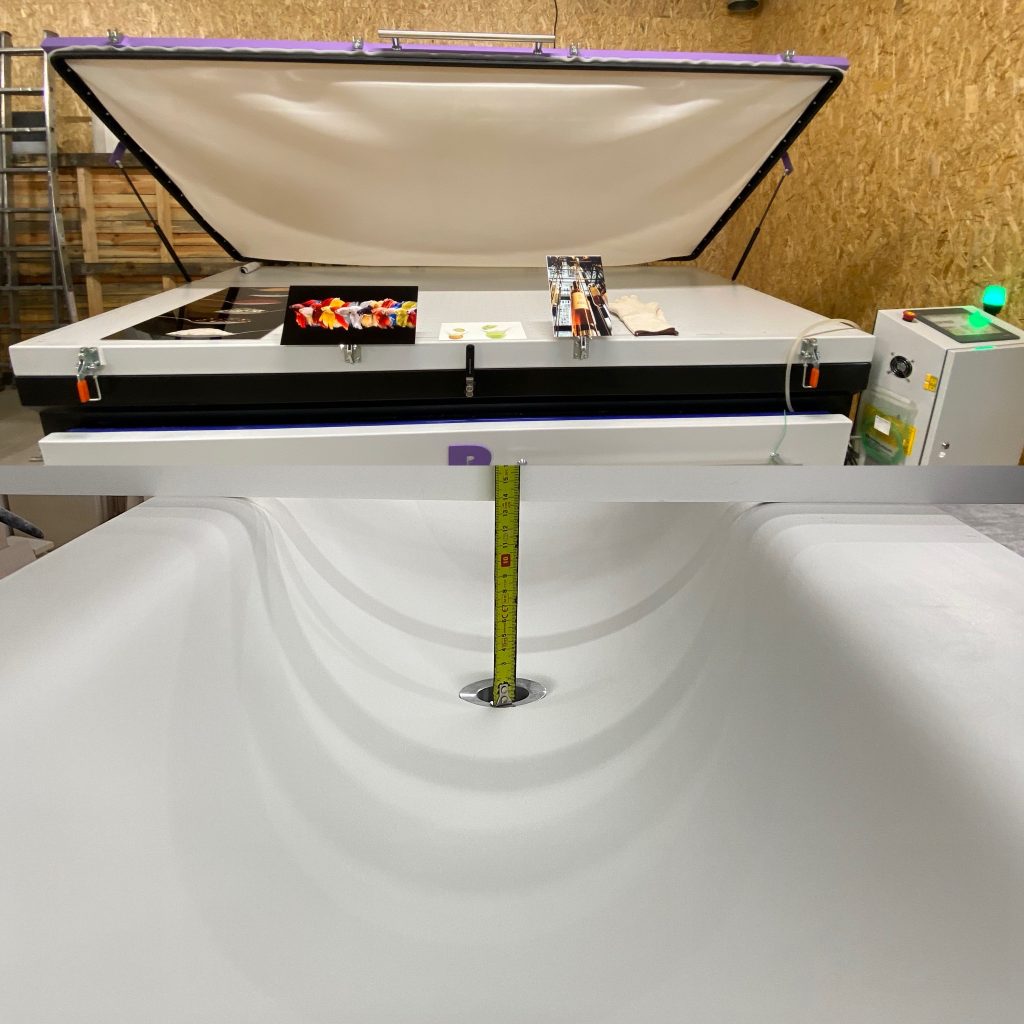
When thermoforming deep sinks, precise temperature control on the platen becomes crucial. A lack of control of just 3 or 4 degrees can lead to severe damage, as we need to use a mold and counter-mold with 9 tons of pressure.
Temperature table for heating materials called "solid surface"
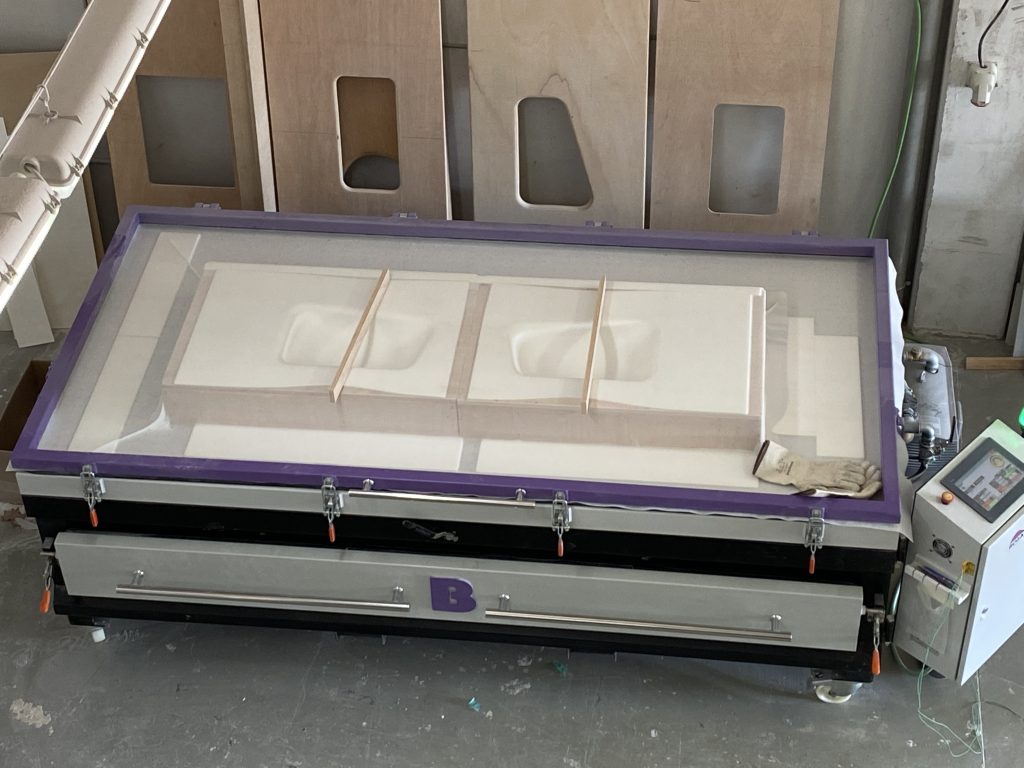
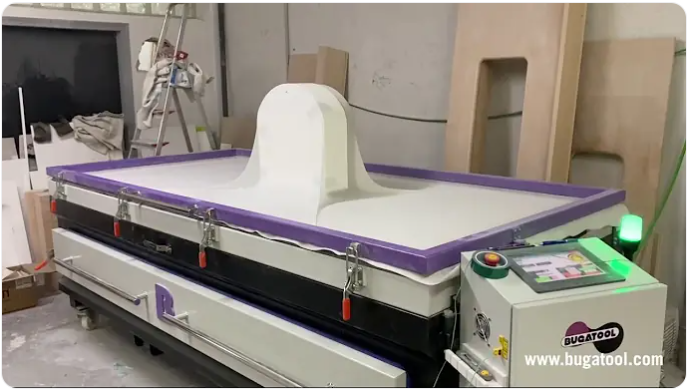
Our Buga Duo 2612 oven and press It's the most popular choice among our customers for controlling the temperature of solid surface sheets and ensuring reliable results. However, if you already have a furnace in your workshop and want to incorporate probe technology, we can offer you advice and a technological solution. Contact us for more information.